Aloha. My name is Kiʻi Kahoʻohanohano. I am a Native Hawaiian mother of five, a traditional birth worker, and a candidate for State House District 10 — Waiehu, Paukūkalo, Wailuku, Wailuku Heights, Waikapū, and Hyashi Village. This is where I live, where I am raising my children, and where I have spent more than two decades doing the work of community.
For much of my early life, until I was fifteen, I was raised in part by my great-grandmother. She was the one who left me with words I have carried as a kind of compass ever since:
“You will be the one to heal our family. You will be the one to return home.”
That charge sits at the center of why I do this work. It is part of my fire, and part of my discipline.
Civic engagement was never something I chose. It was the air in the room. My kūpuna in my lifetime were always testifying to protect this place or that, advocating for the lands, the waters, and the people they loved. I watched them show up, and so I learned to show up. That posture toward community — that steady, durable obligation to the people and places who raised you — is what I carry into this race.
For more than twenty years, I have been a traditional birth worker, a Wailuku small business owner, and a community advocate here on Maui. What I do every day is birth work. I deliver babies. I take care of mamas. And I am sick and tired of watching them get trampled on by politicians who couldnʻt care less.
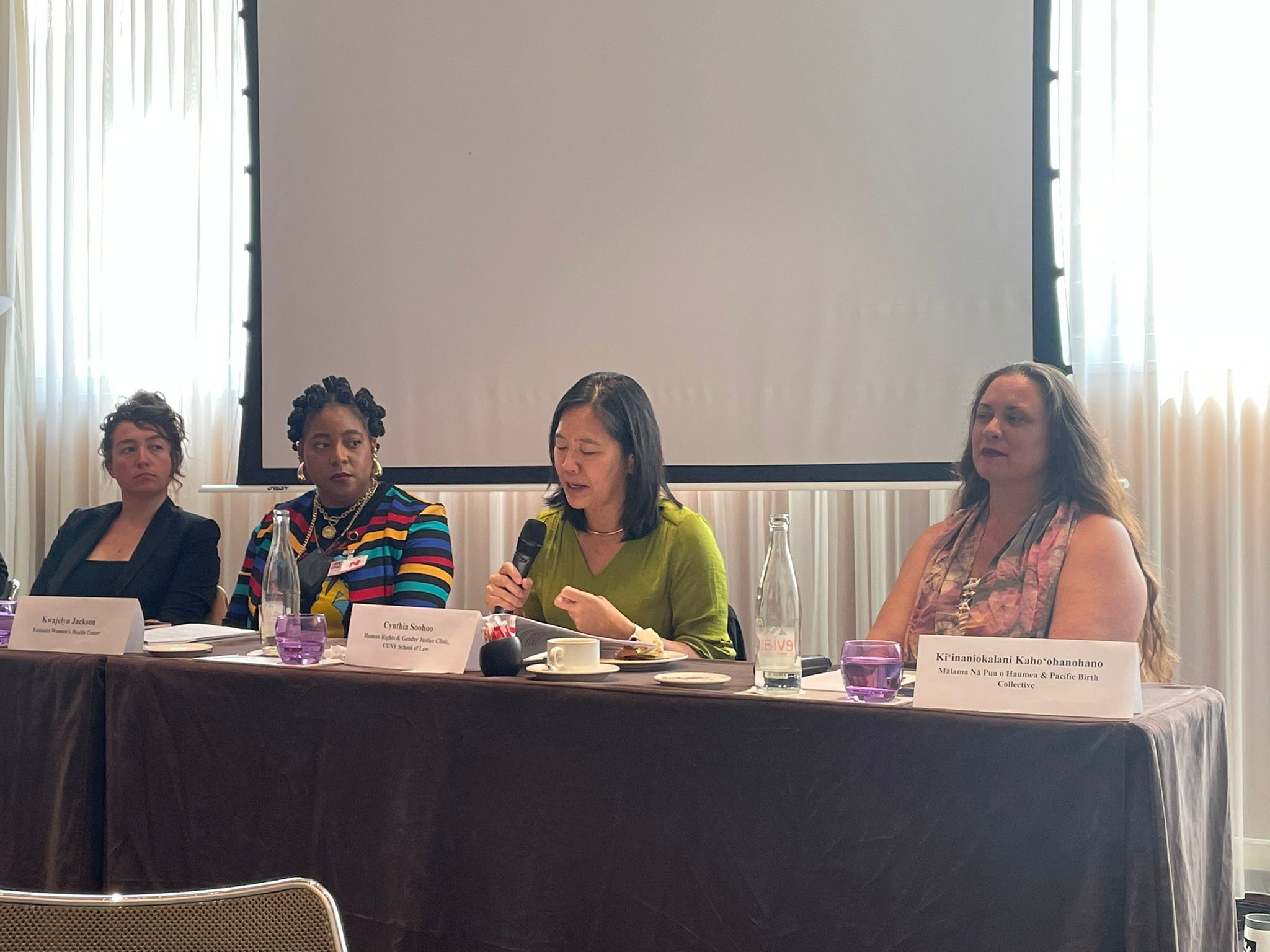
For years, this work has also taken me to the Capitol. I have testified, organized, and sat at policy tables in Honolulu more times than I can count, advocating for our wāhine, our ʻāina, and the people I serve. From that close in, you see both the corruption and the carelessness. That is part of why I am running now.
When fire came to Lahaina, and when the storms hit Maui County, I was boots on the ground from day one. From that close in, you can see something else clearly: it was the community that showed up for each other, and the community that did the work that needed doing. The state arrived later, if at all.
That same year, the State criminalized the practice of traditional midwifery. The new law was built around the medical-system pathway, and made no room for the indigenous, apprentice-trained birth workers who had served our families for generations. I became the lead plaintiff in Kahoʻohanohano v. State of Hawaiʻi, alongside the Center for Reproductive Rights and the Native Hawaiian Legal Corporation. We won. The legislature permanently amended the law to protect traditional Native Hawaiian birthing practices, and our practitioners returned to their work without the threat of prosecution.
That fight taught me what it takes to move the State on something it had already decided. It also taught me that nobody else is going to take this work up for us. If we want maternal health access in rural Maui, real protection for our cultural knowledge, and infrastructure that serves the people who actually live here, we have to do the work ourselves.
Running for office wasnʻt my first choice. But I canʻt stand on the sidelines while our people suffer any longer. I am asking for your help to build the Maui our keiki deserve — one where food is abundant, nobody is homeless, and locals can afford to live well.
Our time is now. Holomua, kākou.